

My inventory is a mess
QuickBooks says you have one inventory value. Your inventory system says another. COGS doesn’t look right, margins are hard to trust, and no one can clearly explain why. Inventory touches purchasing, receiving, fulfillment, costing, systems, and accounting, and when those pieces don’t work together, the numbers don’t either. Good inventory accounting connects what’s happening in your operations to your financials, so your numbers reflect what actually happened.
Does this sound familiar?
You count what’s actually on hand, but your system tells a different story. Damages, samples, returns, write-offs, or simple process gaps can create differences that get bigger over time.
Freight, duties, tariffs, and other landed costs can easily get missed. When your true product costs aren’t captured, your margins aren’t telling you the whole story.
You connected the systems, but the numbers still don’t match. What should sync? What shouldn’t? And why is your inventory balance still off? Instead of a clean month-end, you’re constantly chasing differences.
Your inventory system says one number, your 3PL says another, and Amazon FBA has its own. Suddenly, a simple question like “How much inventory do we have?” doesn’t have a simple answer.
What you sell isn’t always what you stock. When bundles and kits are made up of multiple products, your systems need to account for those components correctly or your inventory and COGS can quickly get off track.

Why this happens
Inventory numbers don’t come from accounting alone. They’re shaped by how you purchase, receive, manufacture, ship, adjust, and return inventory. When those processes aren’t reflected correctly in your systems and accounting, inventory and COGS start to drift.
That’s where the disconnect usually happens. Your accounting team is looking at QuickBooks, while your operations team is looking at the inventory system, warehouse, or 3PL. Each may be doing their part correctly, but no one is connecting the full picture to make sure the numbers tell the same story.
As your business grows, that gets harder. More sales channels, warehouses, Amazon FBA, bundles, manufacturing, and more complex purchasing can quickly outgrow the process that used to work. Before adding another system, we look for where the process is breaking down. Better software can help, but it can’t fix a process that was never clearly defined.
How we fix it
Inventory Accounting
We start by finding where your inventory and your accounting stop matching up. An Inventory Strategy Session gives you a written plan for what to fix first and what can wait. If your Finale or Katana system is already live, a Health Check shows whether your books are getting the right numbers. From there, we can help fix what’s broken and take over your month-end inventory accounting.
Not sure where to start with your inventory?
- 1 hour · $350
Inventory Strategy Session
We look at how your inventory moves from purchase order to your books and find where it breaks down, whether that’s in your accounting, your systems, or how your team handles stock. You’ll leave with a plan for what to fix first and what can wait.
Schedule your strategy session (opens in a new tab) - 1 hour · $350
Inventory Accounting Health Check
Your Finale or Katana system is live, but you’re not sure QuickBooks Online is getting the right numbers. An inventory accounting specialist reviews your setup, what’s posting to QuickBooks, and how you close the month. You get a recording of the session and a report with the next steps to take.
Schedule your health check (opens in a new tab)
Free assessment · Inventory Reality Check
Not sure how serious your situation is?
Take the 4-minute assessment and get a personalized score and a specific action plan based on your answers.
Where to go next
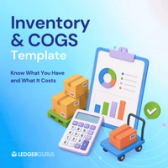 ToolInventory and COGS TemplateA free Excel template to reconcile inventory counts, build landed product costs, calculate COGS by SKU, and value what is on your shelves.
 ArticleWhy Your COGS Numbers Are Probably Wrong (+ 5 Ways to Fix Them)Most sellers' product costs are wrong, often by 20-35 points, usually from outdated numbers or buy cost instead of landed cost. This covers why, and the fix.
 WebinarThe Financial Impact of Inventory: How Inventory Shapes Your Business's Bottom LinePart one of the inventory series. Inventory is an operational problem that sends you a financial bill. Karlie Lester and the Finale team work through where the chaos starts: purchasing on spreadsheets, tracking that misses every outflow except sales, and selling across channels without knowing your true cost. Brittany Brown closes with the two questions clients actually ask, and an honest answer on the cash cycle for a small brand.
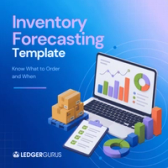 ToolInventory Forecasting TemplateA free Excel template to forecast SKU-level inventory from last year's sales, flag stockouts before they happen, and plan the cash for each order.
How often should an ecommerce business conduct a physical inventory count?
Quarterly is best, though annually is the minimum. A real client story makes the stakes concrete: years of skipped counts led to a hundreds-of-thousands-of-dollars variance surfacing all at once during a business sale's due diligence, which tanked that year's reported profitability and, with it, the business's valuation.
Read: Inventory accounting best practicesHow do you calculate and improve inventory turnover?
Inventory Turnover = COGS ÷ Average Inventory, where average inventory is (Beginning + Ending Inventory) ÷ 2. Most ecommerce businesses should aim for a ratio of 4-6, and you can improve it by ordering smaller quantities more frequently, revisiting pricing on slow movers, doubling down on your best-selling SKUs, and watching seasonal demand trends, though an unusually high ratio can actually signal understocking and lost sales rather than great inventory management.
Read: Calculate and optimize inventory turnoverWhat are the benefits of using inventory management software over spreadsheets?
Spreadsheets become unreliable past roughly a dozen SKUs, causing real problems with scalability, forecasting accuracy, and communication across your team. An IMS centralizes purchasing, transfers, returns, sales, and COGS tracking into one automated system, catching human errors that compound when data is manually cross-referenced across multiple spreadsheets.
Read: When to move beyond inventory spreadsheets
Client stories
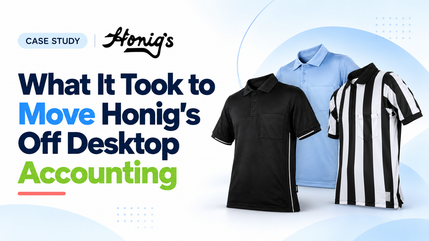

Lower operating costs
Shopify, Finale, and QuickBooks Online now work together, the team is fully trained on the new tools, and operating costs have dropped significantly.
“Read how LedgerGurus Modernized Outdated Systems to Set Them Up for Success”
: Honig’s

How Kult of Athena Closes 2 Weeks Faster
The monthly close now takes less than half the time, inventory adjustments are down, and prepayments live in the books instead of a spreadsheet. David has numbers he can take to the bank.
“My books are turned around 10 to 14 days faster than they used to be.”
: Kult of Athena