
Article
Year-End Tax Strategy Checklist for Ecommerce Sellers
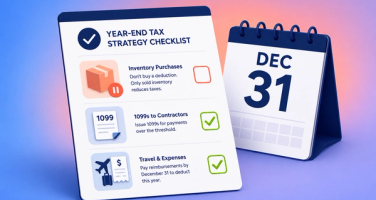
This checklist covers five tax moves to make before December 31st, starting with the most common and costly mistake sellers make with year-end inventory.
Topic hub
Articles, videos, podcasts and webinars on Income Tax for ecommerce brands.
This checklist covers five tax moves to make before December 31st, starting with the most common and costly mistake sellers make with year-end inventory.
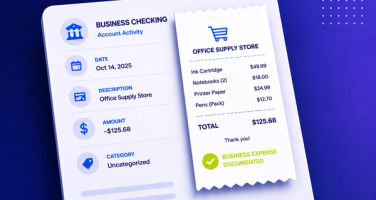
Keeping receipts feels tedious, but it protects your business. This covers four key reasons they matter, from tax justification to audit readiness, plus tools.
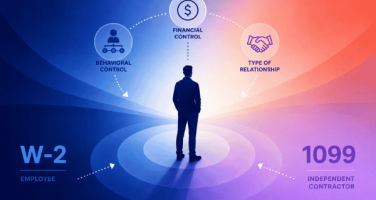
Worker misclassification is costly, and states are cracking down harder. This covers the IRS's three-part test, pros and cons of each type, and what's at stake.

Meals and entertainment deductions changed significantly for 2026. This covers what's 100%, 50%, or newly 0% deductible, plus the documentation you need either way.
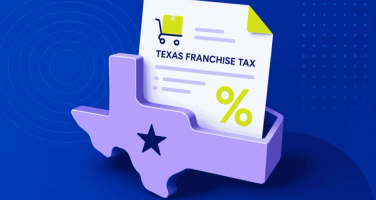
Texas franchise tax isn't sales tax, and confusing the two costs sellers with Texas nexus. This covers who pays it, how to calculate and file it, and deadlines.
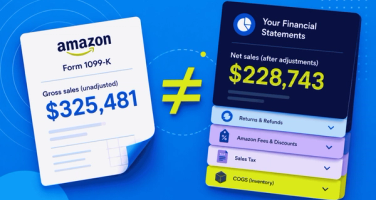
The Amazon 1099-K rarely matches your books, since it only reflects gross sales. This explains why, plus how to handle taxes, COGS, and QuickBooks setup.

Texas franchise tax is a privilege tax on gross revenue, not a sales tax and not an income tax, and it applies to any business with nexus in Texas regardless of sales channel. As of January 1, 2024 the threshold rose from $1.18 million to $2.47 million and the No Tax Due Report was scrapped. Kelley Birrell covers what changed, which form applies at which revenue level, and walks both forms line by line.

Without an EIN (employer identification number) you cannot open a US bank account, get a mailing address, or register for a sales tax permit. If you are outside the US with no Social Security number and no ITIN, the online application is not available to you. Kexin Smith walks through the only route that works: fill out Form SS-4 completely, call the IRS right when they open, confirm every line with an agent, and fax the form over. They give you the number on the call.

Your Amazon 1099 won't match your books, and that's expected. The 1099 reports gross order totals while your accounting uses fulfilled, shipped sales net of fees, returns, and discounts. Brittany Brown shows how to prove your numbers are right anyway: pull Amazon's date range summary report, compare net income to your books with COGS added back, and expect to land within a few hundred dollars. She also covers handling international channels in foreign currency.

The big beautiful bill changed what ecommerce sellers can write off and when. Lauren Maillard walks Stephen Brown through bonus depreciation and why it helps with a forklift but not a warehouse, full expensing for research and development, the 20% qualified business income deduction, and the new deductions on overtime and car loan interest. She also explains why your books and your tax return can legitimately disagree, and why social media tax advice fails IRS scrutiny.

The follow-up to part one, covering what happens when a buyer shows up. Heather Allen and Steve DeWitt of Tanner walk through the due diligence checklist, why you should size your own exposure before the buyer does, and how asset sales and stock sales split the tax bill differently for each side. Then the elections worth knowing about: the cash method, bonus depreciation, PTET, and the employee retention credit.

Entity choice looks like paperwork until it costs you ten million dollars. Heather Allen and Steve DeWitt of Tanner walk through LLCs, S corps, and C corps: how each is taxed, how owners actually get paid, and what happens when a buyer arrives. Along the way, why an S election can permanently disqualify you from the section 1202 exclusion, and how remote employees and 3PL inventory create filing obligations you never planned for.
No, it depends on the type. Most business meals (client meals, travel meals, in-office meeting food) are only 50% deductible. Some meals are 100% deductible (holiday parties, open-house events, meals counted as taxable compensation), and true entertainment, like sporting event tickets or club memberships, isn't deductible at all since the Tax Cuts and Jobs Act.
Read: When meals are 50% vs. 100% deductibleYes. Annual software subscriptions common across an ecommerce tech stack (Shopify, inventory tools, ad platforms) are deductible, but they should be recognized monthly across the subscription period rather than dumped entirely into the month you paid for them.
Read: Year-end tax strategy checklist for sellersYes, Amazon and other third-party platforms must issue a 1099-K to sellers who cross $20,000 in unadjusted gross sales and 200 transactions in a calendar year. It only reflects gross sales, not shipping, returns, or discounts, so you have to reconcile it against your actual financial statements rather than treat it as your real revenue number.
Read: Reconcile your 1099-K to your financialsWe use cookies to improve your experience and to measure how our site and ads perform.Read our Cookie Policy