

Article
Shopify Tax vs. Avalara for Shopify: How Shopify Sales Tax Works Now
Shopify sellers have two sales tax options: Shopify Tax or Avalara for Shopify. This compares pricing, features, and limits on automated filing for each.

LedgerGurus expert
Director of Growth
Spots weak points in ecommerce books before they limit a brand's growth
Stacy Walker is the Director of Growth at LedgerGurus, holds a Bachelor's Degree in Business Management, and works only with scaling ecommerce brands.
Stacy sits between the growth side and the accounting side of a business, helping founders see whether their books can carry them to the next stage. Stacy catches early warning signs like processes that only work at today's order volume, margins slipping as new channels launch, and reconciliations starting to fall behind.
In one case, Stacy identified years of previously unrecognized sales tax exposure stemming from economic nexus obligations across multiple states. Recognizing the potential financial and compliance implications, she helped the brand understand its options and guided them through the voluntary disclosure agreement (VDA) process. This strategic approach allowed the company to limit historical lookback periods, significantly reduce potential penalties, and address past liabilities while minimizing financial exposure.
Her ability to recognize complex compliance risks, connect clients with the right solutions, and navigate them through challenging situations demonstrates the strategic value she brings to the businesses she serves.
Outside of work, Stacy grows flowers from seed when not traveling or out on a trail.
An accountant can tell you whether your books are accurate; I can tell you whether they're about to hold you back. Working only with scaling ecommerce brands, I've learned to catch the early warning signs: the process that only works at today's order volume, the margin quietly eroding as new channels come online, the reconciliation that's just starting to slip. I catch them while they're still small fixes rather than growth ceilings.
One brand came to us focused entirely on scaling, with no idea they'd been accumulating sales tax liability for years. Under economic nexus rules, they'd triggered collection obligations in several states without ever registering.
That's the kind of quiet exposure that becomes a back-tax bill the moment a state comes looking. I flagged it early, before it turned into a crisis. From there, our team worked through voluntary disclosure agreements state by state to cap the lookback period and cut the penalties.
We got them registered and collecting correctly, and brought them out fully compliant, with a manageable bill instead of a catastrophic one and almost no disruption to the business.
My wheelhouse is the point where growth and accounting meet.
That means financial readiness for scaling brands, protecting margins as new sales channels come online, keeping multi-channel reconciliation from slipping, and spotting sales tax exposure before it becomes a back-tax bill.
Above all, I help founders understand what their books need to become, so they make decisions from real data instead of gut feel.
Away from work, I grow flowers from seed. When I'm not in the garden, I'm usually traveling or out on a trail. I also turn what I learn at work into TikTok videos for ecommerce sellers trying to figure out the same things on their own.
Shopify sellers have two sales tax options: Shopify Tax or Avalara for Shopify. This compares pricing, features, and limits on automated filing for each.
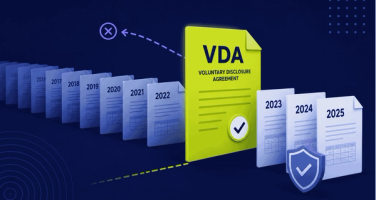
A Voluntary Disclosure Agreement lets a business come forward on sales tax before a state finds out, for reduced penalties. This covers who qualifies and how.
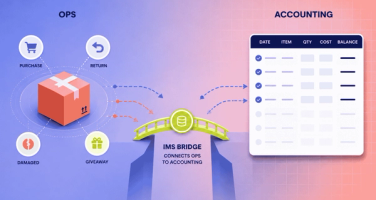
Your accountant can only record what operations reports, not track your inventory for you. This covers five spots the gap shows, like samples and dead stock.
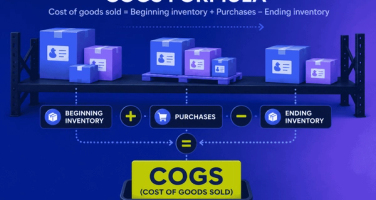
The COGS formula is simple, but an accurate number needs quantities and a valuation method. This covers what's included, four calculation methods, and more.

A Washington seller got a polite letter asking about their sales. No threats, no penalties named. It was a nexus questionnaire, and because they paused before answering, they still had time to file a voluntary disclosure agreement (VDA) first. Stacy Walker sorts the four notices states send: nexus questionnaires, missing return notices, audit letters, and assessments. She explains the deadline attached to each and what answering too fast costs you.

You know you have exposure. You do not know which states, how many years, or whether registering will trigger an audit, so the spreadsheet stays closed for another year. Stacy Walker lays out the three step sequence that got one seller compliant in 90 days: get current where you have nexus now, size up the back years with rough numbers, then send high exposure states to voluntary disclosure agreements (VDAs) and low exposure states to direct registration.

Every month you put off sales tax, the bill gets bigger. This video runs a Texas example: three years of unfiled sales tax comes to $74,000 in back tax, penalties, and interest, and one more year pushes it to $100,750. A voluntary disclosure agreement (VDA) can waive the penalties and cap the lookback, but only if you contact the state before it contacts you. You also get three steps for acting while you still have leverage.

Put twelve months of P&L numbers into the calculator and it shows what a tariff increase does to your gross profit and net income. From there you can model a price increase against elasticity, layer in cost cuts, and see the break even math: how much revenue you would need, or how much overhead you would have to remove, to land back where you started. Stacy Walker walks through each sheet.

Miscategorize a few costs and your P&L will tell you that you're profitable when you're not. This video sorts what belongs in COGS, meaning product cost, raw materials, manufacturing labor, inbound shipping, and import duties, from what does not, meaning ad spend, shipping to customers, and refunds. You also get the answer on packaging, which usually counts, and a benchmark to measure against: COGS at 20% to 40% of revenue.

Your margins look healthy right up until you find out your cost of goods sold was never calculated correctly. Stacy Walker breaks down four ways ecommerce sellers can calculate COGS: expensing inventory the moment you buy it, estimating it as a percentage of revenue, working from beginning and ending inventory counts, and tying unit cost directly to units sold. You get the tradeoff behind each one and why sticking with your choice matters as much as the choice itself.

Closing your books at month end means you find out about a margin problem 30 days after it starts. Stacy Walker puts numbers on that delay. A business bleeding $3 per order across 150,000 orders loses $450,000 before anyone notices, and a candle maker who missed a tripled wax cost gave up $180,000 over six months. An inventory management system recalculates COGS as orders and purchase orders move through it.

Sellers tell Stacy Walker they don't need an inventory management system because their 3PL already handles inventory. Her answer is that a 3PL handles the warehouse, the picking, packing, and shipping, and may send you a report on what went out. What it doesn't do is show availability across your selling channels, forecast when to restock, generate purchase orders against your lead times, or calculate your cost of goods sold.

Colorado has 72 self collecting home rule cities, and each one sets its own rates and taxability. That means a separate return per city on top of your state filing. Stacy Walker explains how the Sales and Use Tax System consolidates 66 of those cities into a single return, which six still demand their own, and why one seller shipping into Denver and Broomfield counties can end up filing nine returns in a single month.

Expense inventory the month you buy it and January shows a $15,000 gross loss while February and March look great. Neither number is real. Stacy Walker shows the alternative: code purchases to inventory on the balance sheet, then release cost to COGS as units actually sell. You get the two things you have to track, quantity and value by SKU, how to build a product cost catalog from a vendor invoice, and how Shopify can serve as your product master.

Most ecommerce businesses run a mix of cash and accrual, and they move along that spectrum as they mature. Stacy Walker maps four stops: watching the bank balance as a startup, moving revenue and then COGS to accrual once timing differences distort your months, spreading prepaid expenses so month to month is comparable, and full GAAP compliance once investors, debt holders, or the $25 million threshold require it. A fictional duck company illustrates each stage.

Buy $50,000 of inventory, expense it on the spot, and January shows a catastrophic loss while February and March show profits you never earned. Stacy Walker explains why inventory belongs on the balance sheet until it sells, and what the year-end inventory penalty actually is: your tax accountant adjusting for stock you still hold, which cuts your COGS and raises your taxable income. Frustrating, she says, but entirely correct.

Sellers abandon expensive inventory implementations after discovering the tool cannot handle a workflow they cannot change. Stacy Walker gives you five questions to answer before you sign anything: do you manufacture or buy finished goods, what does the tool integrate with, do you fulfill yourself or use a 3PL, how does pricing scale as you grow, and can it actually run your workflows. She also names the three tools LedgerGurus sees succeed most often.

Parker was weeks from a $90 million acquisition when it filed for Chapter 7, leaving customers like Stephen Brown unable to work out what they owed or to whom. He and Stacy Walker use that failure to frame four risks worth checking before you route money through any fintech: vendor, financial, operational, and strategic. They also cover why most fintechs sit on top of the same handful of partner banks, and why that concentration is worth worrying about.

A non-developer can spin up a working internal tool in an afternoon, which has operators asking why they pay for software that does 80% of what they need. Stephen Brown spent twenty years in enterprise software, and he walks Stacy Walker through what that question misses: ongoing maintenance, the builder who might leave, security and compliance exposure, and the real cost once tokens are counted. He closes with a decision framework and argues the better question is what you buy next.

AI companies run on venture capital, which means the price you pay is not the cost of the product. Stephen Brown walks Stacy Walker through what happens when that equalizes: base subscriptions plus token consumption, already visible in Claude's limits, GitHub Copilot's June shift, and Gorgias. He covers what tokens are, why GPU compute changed the economics, and why matching cheaper models to simpler work is about to matter. He finishes with how to spot the creep before it compounds.

The Supreme Court ruled the IEEPA tariff authority unconstitutional, and Customs and Border Protection has built a system called CAPE to process refunds. Stephen Brown walks Stacy Walker through what it takes: an ACE portal account, bank details, eligible entry numbers, and a CSV upload. Phase one went live April 20 and payment runs 60 to 90 days. He also covers how to book the money once it lands, and why the refund trolls from the PPP era will show up again.

LedgerGurus benchmarked its own monthly accounting clients and sorted them into four quadrants by growth and profitability. Stephen Brown and Stacy Walker walk through what separated the 44% that were growing and profitable: 66% gross margins, 7.5% of revenue on ads, and a wholesale channel in every top quartile brand. They also cover why the low ad spend surprised them, why cash balances track profit rather than growth, and the three levers that actually move profit.

Stacy Walker talks to eight to fifteen brands a week, and reckons only about one in five knows its true bottom line. On gross margin she puts it nearer one in ten. She and Stephen Brown walk through all four margins: what each one measures, why cost of goods sold gets stuffed with things that belong in cost of sales, and why pushing interest and tax below the line shows the real efficiency of the business. They close on which margin to fix first.

You track revenue but still wonder if your numbers are normal. LedgerGurus benchmarked around 90 of its own ecommerce clients: 44% are growing and profitable, median gross margin sits at 63.7%, and ad spend runs just 8.1% of revenue. Stephen Brown and Stacy Walker break down the four performance quadrants, why wholesale dilutes ad spend, which costs to attack first, and how to read a benchmark report without jumping to the wrong conclusions.
 Brittany BrownChief Executive Officer
 Stephen BrownChief Operating Officer
 Anna YoungDirector of Learning and Initiatives
We use cookies to improve your experience and to measure how our site and ads perform.Read our Cookie Policy