

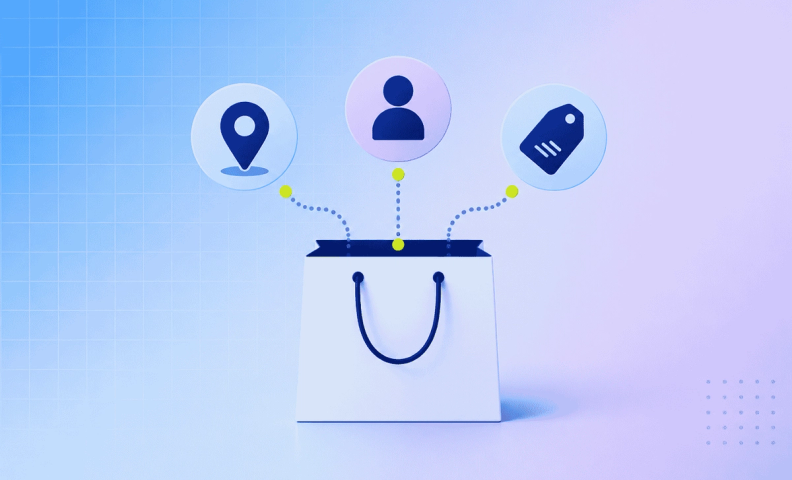
If you've ever felt confused by sales taxability, you're not alone. Between different states, different customers, and different products, it's tough to know what you should be doing and what can wait. That's why we're breaking down the three key questions every ecommerce seller needs to answer, without the jargon:
- Where do you owe tax?
- Who should be charged?
- And what do you actually need to collect tax on?
Where: It all starts with location
Let's start with one of the trickiest parts of sales tax: where the sale happens. It sounds simple, right? A customer places an order, you ship it, done. But when it comes to sales tax, that “where” opens the door to a lot of complexity. Every state sets its own rules for when you're required to collect sales tax. It depends on something called nexus. Nexus just means you have a relationship with that state strong enough that they can legally require you to collect tax on their behalf.
There are two main types of nexus:
- Physical nexus: If you have a warehouse, office, or remote employee in a state, you're required to collect sales tax.
- Economic nexus: If you sell over a certain amount in a state (usually $100,000 or 200 transactions), you're required to collect, even if you've never set foot there.
And here's where it gets messy. A single shipping address can pull in tax rates from the state, city, county, and special tax districts. In some places, crossing the street literally changes the rate. For instance, in Colorado, one side of a street might be taxed at 4%, the other at 7.5%. If you've ever tried to guess tax rates using zip codes, you already know how unreliable that is. That's why ecommerce sellers use tax engines that calculate the right rate automatically, sometimes right down to the rooftop.
Bottom line: Location drives everything in sales tax. Let the right tools handle the complexity, so you don't have to.
For more information on nexus, read our Complete Guide on Sales Tax Nexus for Ecommerce Sellers. Want to see where you might have nexus? Grab our free guide: Sales Tax Compliance Checklist. It includes a state-by-state threshold chart and everything else you need to get compliant.
Who: Not every customer gets charged sales tax
Now let's talk about who you're selling to, because not every customer should be charged sales tax. If you're selling both retail and wholesale, or to schools, nonprofits, or government entities, this gets complicated fast.
Here's a simple breakdown:
- Retail customers: Almost always taxable.
- Wholesale customers: Usually exempt, but only with the right paperwork.
- Nonprofits, schools, churches, and government orgs: Sometimes exempt, sometimes not (it varies by state).
This is where a lot of ecommerce sellers run into trouble. Even if a customer should be exempt, you need proper documentation to prove it. If you're audited and you don't have it, you're still on the hook for the tax, no matter what they told you. For more information on sales tax exemptions, read Sales Tax Exemptions for Ecommerce Sellers: The 3 Types (and How to Document Them).
Things get even trickier with dropshipping. You've got multiple parties in one transaction:
- Your customer buys from you.
- You buy from your supplier.
- The supplier ships to your customer.
So, who collects the tax? Whose exemption certificate applies? Who's responsible for remitting? Without a clear system, it's easy to make mistakes. And those mistakes can be costly. For more information on sales tax drop shipping, read Sales Tax for Dropshippers in the US: Who Pays and How to Save.
Quick tip: If you work with exempt customers, even occasionally, have a solid process for collecting, storing, and applying exemption certificates at checkout.
Bottom line: Selling to the wrong who without the right paperwork can create a mess. Get your documentation in order and don't leave it up to chance.
What: How product type affects sales taxability
We've covered where the sale happens and who you're selling to. Now let's talk about the final piece: what you're selling. Here's the truth: not all products are taxed the same way. Take clothing, for example. Seems simple, right? If you sell shirts, pants, or hats, you charge tax.
Except:
- Pennsylvania: Most clothing is tax-free, unless it's formal wear.
- New York: Tax-exempt if it's under $110 per item.
- Massachusetts: Exempt up to $175 per item, but anything above that? Taxable as a “luxury” item.
Now apply that kind of logic to other categories like groceries, supplements, or medical products, and you start to see how fast this gets complicated. You can't just say “I sell food” and expect the rules to be the same across all 50 states. One candy bar might be tax-exempt. Another with different ingredients? Taxable. No joke.
The good news? You don't have to memorize state-by-state laws. You just need to know your products and categorize them accurately. Then let your tax engine figure out the tax rules for you. Ask yourself:
- Is it clothing? What kind?
- Is it food? Packaged, prepared or fresh?
- Is it software? Downloaded, shipped, or SaaS?
Even small differences in product type can change the sales taxability in a big way. But once it's set up correctly, your system can take it from there.
Bottom line: The “what” matters. If you sell a variety of products, or even just one that falls into a tricky category, make sure your setup reflects exactly what it is, so taxes don't trip you up.
Common sales tax mistakes
Sales tax might not feel urgent but ignoring it or doing it wrong can lead to expensive headaches later. Let's break down two common (and risky) mistakes.
Mistake #1: Collecting sales tax BEFORE you register
It might seem proactive to start collecting tax as soon as you start selling in a new state, but if you haven't registered with that state first, it's ILLEGAL to collect sales tax. Since you don't have to register for a sales tax permit until you have nexus in a state, don't make things messy for yourself by collecting before you have to. If you do, the state may dig in, asking when you started, why you weren't registered, and whether you owe back taxes.
Mistake #2: Not registering when you should have
Some sellers still believe they're flying under the radar. But states are paying attention. Many now regularly send out pre-audit questionnaires, monitor payroll tax records, and use software to spot noncompliant sellers. If they find you, they don't just ask you to start collecting now. They look at how far back they can go. And if you didn't collect tax when you should have? You could be stuck paying it out of pocket, plus interest and penalties.
Here's the thing: Sales tax might not make you money, but it can definitely cost you money if you mess it up. Pro tip: Don't wait for a scary letter in the mail. Get registered BEFORE you collect and have a plan in place to stay ahead of your obligations.
Why you need a sales tax engine (and what it does)
At this point, you've seen that sales tax isn't just one simple rule. It's a mix of rates, customer types, product quirks, and ever-changing laws. Trying to manage all that manually? That's a full-time job most ecommerce owners don't have time for. This is where a sales tax engine, like Avalara's AvaTax or Shopify's Shopify Tax, comes in. These tools handle the complexity behind the scenes, so you can focus on running your business.
Here's what they typically do:
- Calculate the correct tax rate based on your customer's shipping address.
- Apply exemptions for eligible buyers like wholesalers or nonprofits.
- Determine product taxability based on what you're selling and where it's going.
- Track and store records for filings and audits.
You don't have to stay on top of every tax change. You just need a system that gets it right automatically.
Bottom line: A sales tax engine lets you stop stressing about the details and focus on what you actually care about: running and growing your business.
Frequently asked questions
What are the three factors that determine sales taxability?
Where the sale happens (your nexus), who the customer is (retail vs. exempt), and what you're selling (since different products are taxed differently by state).
Do I need documentation for exempt customers like wholesalers or nonprofits?
Yes. Even if a customer is genuinely exempt, you need a valid exemption certificate on file. Without it, you're responsible for the uncollected tax if you're audited, no matter what the customer told you.
Is sales tax on clothing the same in every state?
No. Pennsylvania exempts most clothing except formal wear, New York exempts items under $110, and Massachusetts exempts items under $175 but taxes anything above that as a luxury item. Always check the specific rules for each state you sell into.
Is it legal to start collecting sales tax before I register in a state?
No. Collecting sales tax before you're registered is illegal. Only register once you've actually crossed a state's nexus threshold, then start collecting.
What happens if I should have registered in a state but didn't?
States are increasingly proactive about finding non-compliant sellers through pre-audit questionnaires and monitoring tools. If they find you, they'll look at how far back your obligation goes, and you could owe back taxes plus interest and penalties.
Do I really need a sales tax engine, or can I track taxability manually?
Technically you can, but between shifting rates, exemptions, and product-specific rules across 50 states, most ecommerce sellers find it's not a sustainable manual process. A sales tax engine handles rate calculation, exemptions, and product taxability automatically.
Make sales tax one less thing to worry about
Once you understand the where, who, and what of sales taxability, and have a system that handles the heavy lifting, sales tax stops being something you have to stress about. Whether you're catching up after falling behind, responding to a state's letter, or just want ongoing filings handled, our sales tax team can take it off your plate, whether you're dealing with five states or fifty.
