As experts in inventory and COGS accounting for ecommerce sellers, we see one thing more than anything else: clients often assume that outsourcing their accounting means we handle everything related to inventory. But that’s not how inventory accounting works and without clarity on operational events, even the best accounting team can’t produce accurate numbers.
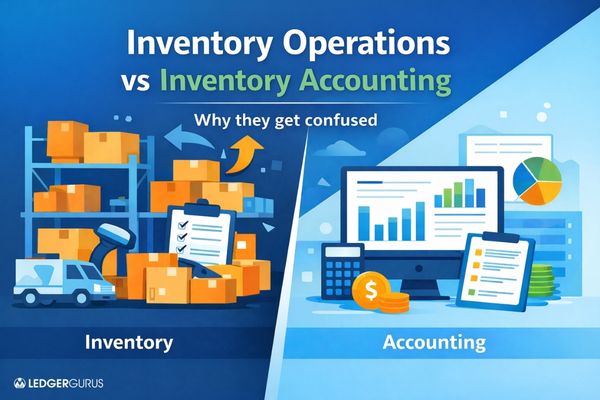
Today we want to unpack the key disconnects we see most often so you know what your outsourced accounting partner can do, where the handoff happens, and how you can support better financial outcomes.
We’ll cover:
- The core difference between inventory operations and inventory accounting
- Why gaps happen (and what gets missed)
- Why an Inventory Management System (IMS) is critical (and why manual tracking fails)
- What we can do with the right information
- How to bridge the gap between ops and accounting
- Stop managing inventory in spreadsheets. Start getting your numbers right.
Let’s get into it.
Key Takeaways
- Inventory operations and inventory accounting are not the same and confusing them leads to bad numbers.
- Your accountant can only work with what they’re given, so missing operational data creates gaps.
- Common issues like returns, damaged goods, and giveaways often go unrecorded and throw off COGS.
- An Inventory Management System (IMS) helps connect what’s happening in your business to your financials.
- Spreadsheets can’t keep up with real-time inventory movement as you grow.
- Clear communication between your team and your accounting team is what turns good data into accurate financials.
- When your inventory data is clean and complete, your margins and profitability finally make sense.
Inventory Operations vs. Inventory Accounting: The Core Difference
Inventory Operations include all the physical, real-world movements of your products:
- Purchasing inventory
- Receiving goods
- Events like trade shows or warehouse sales where inventory moves or gets used
- Giving inventory away for marketing or influencer use
- Handling returns and unsellable inventory
These activities affect inventory numbers, but they don’t automatically show up in your accounting unless someone tells your bookkeeper what happened and provides the data (quantities, costs, dates, etc.).
Inventory Accounting, on the other hand, is about recording those changes accurately in your books so your financial statements reflect:
- How much inventory you actually have
- How much it cost you when it was sold (i.e., Cost of Goods Sold, or COGS)
- How those costs affect your margins, profitability, and tax reporting
Without the operational context, accounting becomes guesswork.
To learn more, watch Why Your Inventory Reports Don’t Match Reality. Also, read Cost of Goods Sold – A Key Number for Ecommerce Businesses.
Why Gaps Happen (and What Gets Missed)
Here are the most common operational scenarios that cause confusion:
1. Purchases vs. Receipts
Most sellers understand inventory purchases, but accounting needs to know when goods were received and at what cost (including duties, freight, etc.). Just because you paid for product doesn’t mean it’s inventory yet and that difference matters.
2. Unsellable Inventory
Products that are damaged, expired, or otherwise unsellable still need to be tracked and reported. Without that information, your accounting will overstate your inventory asset and understate expenses.
3. Inventory Used for Marketing or Gifting
Giving away product, whether for influencers, promotions, or sampling, isn’t a sale. But it still reduces the physical inventory you have. If your accounting team doesn’t know about these movements, your COGS and inventory balances will be off.
4. Returns and Chargebacks
Returns don’t always get handled properly in the financials. Was the item returned in sellable condition? Was it scrapped? Each outcome affects your books differently and without clear reporting, your accountant can’t record it properly.
5. Events & Trade Shows
Inventory you take to events might sell off platform, get promotional use, or come back unsold. Each of those needs to be communicated to your accounting team so they can book it correctly.
To learn more about how good operations processes are so important for accurate inventory numbers, watch 5 Reasons Profit Lies Hidden in Inventory (Why Profitable Brands Still Feel Cash-Poor).
Why an Inventory Management System (IMS) is Critical (and Why Manual Tracking Fails)
This is the missing link for most sellers.
Even with perfect warehouse execution and perfect communication, manual tracking simply cannot keep up with the speed, volume, and complexity of ecommerce. An IMS ties together the operational world and the accounting world so both teams have accurate information. Here’s why an IMS is essential, not optional:
1. Real-Time Quantities are Nearly Impossible to Do Manually
Multiple sales channels, daily returns, warehouse adjustments, and giveaways create constant movement. Without an IMS, you get:
- Negative inventory
- Incorrect COGS
- Stockouts or overselling
- Messy month-end reconciliations
An IMS syncs quantities as they happen, which is something no spreadsheet can do.
2. Landed Cost Allocation Must Be Precise
Freight, duties, tariffs, handling fees all matter. An IMS can:
- Allocate costs automatically
- Recalculate average cost or FIFO layers
- Keep valuations consistent across months
Manual landed cost tracking almost always leads to distorted margins.
For more on landed costs, read Understanding Landed Cost: What It Is and How to Calculate It.
3. Multi-Channel Selling Requires Multi-Channel Tracking
Amazon, Shopify, Walmart, wholesale, subscriptions, events, each has different operational nuances. An IMS brings everything into one source of truth so accounting isn’t stitching together fragments.
4. Returns, Damages, and Gifting Need Categorization
Manually tracking is nearly impossible for:
- Sellable vs. unsellable returns
- Warehouse shrink
- Marketing samples
- Damaged/expired product
An IMS tags and classifies these movements automatically so accounting gets accurate reports.
5. Accurate COGS Requires Clean, Consistent Data
LedgerGurus can produce exceptional COGS, but only when quantity and cost data are reliable. The best way to achieve that?
A solid inventory tool that standardizes operational inputs.
At LedgerGurus, we often discuss tools like:
These solutions reduce chaos, standardize data, and create the operational clarity needed for accurate financials.
For more information, read How to Tell If You’re a Good Fit for an Inventory Management Solution.
What We Can Do WITH the Right Information
At LedgerGurus, our goal is to deliver inventory and COGS numbers that are accurate, reliable, and truly decision ready. An Inventory Management System makes that work far more efficient and far more accurate, but even with a great tool, your accounting is only as good as the information that flows into it. To do our best work, we need visibility into:
- Quantities involved in any inventory movement
- Timing of the movement (when product was received, transferred, or used)
- Cost details (landed costs, freight, duties, tariffs, fees, etc.)
- The type of movement (sale, sample, unsellable, return, event use, etc.)
An IMS can capture a large portion of this automatically.
And for the movements that aren’t captured automatically, we rely on your team to communicate them clearly and consistently. Once we have clean, accurate operational data, through your processes and your systems, we can:
- Calculate true COGS and inventory value
- Reconcile and adjust inventory for known events
- Produce financial statements you can trust
- Prevent costly surprises that distort margins or cash flow
How to Bridge the Gap Between Ops and Accounting
Here are the best practices we recommend to our clients:
- Use standardized reports or event logs, whether coming from your IMS or your warehouse team.
- Capture movements in real time, not at year-end when memory is fuzzy.
- Include all landed cost components: freight, tariffs, duties, inbound shipping.
- Communicate non-sales inventory movements: samples, shrink, FBA removals, event usage, etc.
- When possible, centralize everything in an IMS so data flows cleanly and consistently.
An IMS doesn’t replace communication. but it dramatically reduces confusion, errors, and manual work.
Stop Managing Inventory in Spreadsheets. Start Getting Your Numbers Right.
If your inventory operations live in a spreadsheet, your accounting will always be reactive, not accurate. The right inventory tool bridges the gap between what happens in your warehouse and what shows up on your financials.
Your outsourced accounting team loves numbers and we love getting them right. But numbers without context aren’t worth much, especially when inventory is your biggest asset and COGS is one of your most critical metrics.
An IMS provides the operational clarity. You provide the transparency. We provide the accounting expertise.
When all three work together, your financials finally reflect reality and you can run your business with confidence.
Ready to get your inventory and accounting working together?
Our outsourced accounting team specializes in helping product-based businesses clean up their books, connect the right tools, and get accurate financials they can actually rely on.
Schedule a discovery call today →