


Trying to figure out ecommerce sales tax on your own? That's a full-time job you didn't sign up for. With every state playing by its own rules, and channels like Shopify or Amazon only handling part of the puzzle, it's no wonder sellers feel confused, frustrated, or just plain behind.
That's where we come in. This isn't just another blog post. It's your go-to resource hub to help you finally understand how sales tax works for ecommerce, what steps you need to take, and how to avoid common (and costly) mistakes. We've packed this page with guides, videos, and downloads to help you:
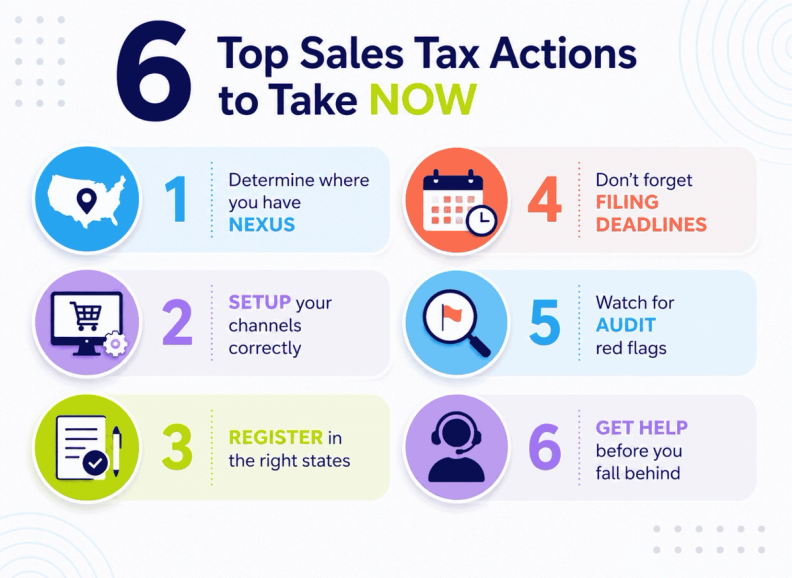
- Know when and where you owe sales tax
- Register and set up your channels the right way
- File without stress
- Avoid (or survive) an audit
- Fix things if you're already behind
And if you don't want to deal with any of it? You don't have to. At LedgerGurus, we specialize in ecommerce sales tax. We can manage the whole process for you accurately, efficiently, and with less stress. Use this guide to learn what's required and what's possible. Then decide if it's time to hand it off to a team who knows the drill.
What to know about ecommerce sales tax before you take action
Before you start registering for sales tax or setting up your platforms, it's important to understand how ecommerce sales tax actually works. The rules vary from state to state, but once you get the basics, everything else gets easier. This section walks you through the core concepts behind sales tax, so you can feel confident about what you're dealing with (and what to do next).
What is sales tax nexus (and how do you get it)?
Sales tax nexus is what determines where you're responsible to collect and remit tax. You can create nexus in two main ways:
- Physical nexus: You have a presence in the state, like employees, a warehouse, or inventory stored with Amazon FBA.
- Economic nexus: You cross a certain threshold of sales or transactions in that state (often $100,000 or 200 orders in a year).
Even if you're running your business from one state, you can create nexus in many others through your ecommerce activity. Marketplaces like Amazon or Walmart can create obligations for you, too.
Read: Complete Guide to Sales Tax Nexus for Ecommerce Sellers. It’s a clear explanation of how nexus works, along with examples, state thresholds, and what to watch for as you grow.
What makes a sale taxable?
Not everything you sell is taxable. And even if your product is taxable in one state, it might not be in another. Sales tax rules depend on three factors:
- Where the buyer is located
- Who the buyer is (business vs. consumer, exempt organization, etc.)
- What the product or service is (tangible, digital, exempt, etc.)
Sellers often assume they should be collecting tax everywhere but that's not always true, and over-collecting can land you in hot water, too.
Read: The Where, Who, and What of Sales Taxability for Online Sellers for an overview of how your products, your customers, and their locations impact your sales tax obligations.
What about exemption certificates?
Some buyers don't have to pay sales tax, but you need the paperwork to prove it. These documents are called exemption certificates, and they're required in most states to avoid charging tax when a buyer is legally exempt.
Common examples:
- Resale certificates for wholesale buyers
- Nonprofit and government entity exemptions
If you don't collect and store these properly, you could be liable for the tax later.
Read: Understanding the Basics of Sales Tax Exemptions for a simple explanation of how exemption certificates work and how to stay compliant.
Watch: How to properly collect and fill out exemption forms like SST and MTC.
What if you use dropshipping?
Dropshipping adds another layer of complexity. You might be selling to a customer in one state, using a supplier in another, and never touching the inventory yourself. That creates a sales tax mess if you don't know how the rules work.
The big questions:
- Who collects the tax? Your business or your supplier?
- Do you need a resale certificate?
- Where do you owe tax in a 3-party transaction?
Read: Sales Tax for Dropshippers in the US: Who Pays and How to Save for how sales tax works in multi-state dropshipping scenarios.
Watch: How to Get a Resale Certificate for Dropshipping for a clear explanation of how to get and use resale certificates when working with dropshippers.
Want the full picture of sales tax? Start here.
If you want a bird's-eye view of everything sales tax touches in your ecommerce business, this is where to start. Our Sales Tax Compliance Checklist walks you through:
- Where and when to register
- What to collect and where
- How to stay compliant as you grow
- The full list of every state's economic nexus thresholds
This guide is like a checklist and a cheat sheet rolled into one. Perfect for busy sellers who want clarity.
Some states have their own extra wrinkles
Nexus, taxability, and exemptions are the foundation, but a few states layer on rules that don't show up anywhere else in the country. If you sell into any of the following, these guides go deeper on what makes them different:
Read: Colorado SUTS Guide for how Colorado's Sales and Use Tax System simplifies filing across the state's notoriously complicated home rule cities, and where it still falls short.
Read: Guide to California Sales Tax for California's layered state, county, city, and district tax structure, and how to figure out what you actually owe.
Read: New York Online Sales Tax Guide for New York's unusual sales tax quarters, the Certificate of Authority you need before you can legally collect, and which ST-809/ST-810 form applies to you.
Read: Illinois Sales Tax Explained for why remote sellers now collect destination-based local rates on top of the state rate, and how the ST-1 and ST-2 forms work together.
How to get sales tax compliant
Understanding sales tax is one thing. Actually doing something about it? That's where most ecommerce sellers get stuck. The good news is that you don't have to figure this out on your own. At LedgerGurus, we help ecommerce businesses get compliant, stay compliant, and offload the mess of multistate sales tax for good.
In this section, we'll walk you through what needs to happen:
- Register for a sales tax permit
- Set up your channels to collect
- Collect the right amount
- Remit to the state
If you're ready to dive in, we've got resources to guide you. And if you'd rather skip the stress and hand it off to pros who do this every day, we're here for that too.
How to register for a sales tax permit
Once you know where you have nexus, the next step is registering to collect sales tax in those states. But here's the catch: every state has its own process, forms, portals, and quirks. We've seen sellers delay registration because it feels too overwhelming, and others rush into it and end up with accounts they didn't actually need.
The best path? Know where you're required to register and do it right the first time.
Read: How to Register for a Sales Tax Permit in the US – What You Should Know. This guide breaks down the entire registration process: what information you need, how long it takes, and common mistakes to avoid.
Watch: How to Register for Sales Tax in Massachusetts. See what the registration process looks like in a real state portal, so you know exactly what to expect.
How to setup your sales channels to collect tax
Once you're registered, you need to make sure your platforms are set up to collect tax correctly. This includes:
- Choosing the right product tax codes
- Activating collection in each nexus state
- Making sure you're collecting tax on shipping where required
Read: Shopify Sales Tax Setup: What to Get Right Before You Touch Your Settings. Detailed guide on configuring Shopify to collect the right sales tax in the right places.
How to collect the right amount (without guessing)
Sales tax rates change often, and they can vary by:
- State
- City
- County
- Special district
Trying to keep track manually is nearly impossible, which is why most sellers either use a tax engine or get help from experts.
Read: Sales Tax Engine vs. Filing Tool: What Each One Actually Does (and Doesn't Do). We compare top tools & engines, so you can pick the best fit for your store.
How to file your sales tax returns
Once you're registered and collecting sales tax, you're required to file returns: on time, in the correct format, and with accurate numbers. Sounds simple, but here's the catch: what your sales platforms report isn't always what the states want to see. That's why understanding your sales tax reports is just as important as knowing how to file. Returns typically ask for:
- Total sales
- Taxable vs. non-taxable sales
- Tax collected by jurisdiction
- Deductions or exempt sales
If you misreport, or guess, your way through this, you're more likely to trigger a notice or audit.
Read: How to File Sales Tax Online: A Step-by-Step Guide (+ State-Specific Details). This guide walks you through how to file accurately, avoid penalties, and keep your business in good standing.
Read: How to Read Your Shopify Sales Tax Report (and Turn It into a Nexus Check). Shows you where to find key sales tax data in your Shopify reports and how to use it when filing returns.
Read: Understanding Your Amazon Sales Tax Report [A Compliance Guide for Sellers]. Understand how Amazon handles tax, and how to pull the right numbers when it's time to file.
Watch: 2 Ways to Solve Duplicate Transactions on Amazon Sales Tax Report. The challenge with Amazon is that it often duplicates transactions on sales tax reports. This video will show you how to solve that problem.
Read: Sales Tax Journal Entry. How to properly account for sales tax in your books and avoid mixing tax collected with revenue. That's a serious no-no!
Sales tax pitfalls (and how to avoid them)
Most ecommerce sellers don't plan to ignore sales tax. They're just busy running businesses, managing inventory, and launching products. But sales tax doesn't wait. When compliance slips through the cracks, states take notice.
This section covers the common traps we see sellers fall into, and what to do if you're already in one. From surprise audit letters to falling behind on registrations, we'll help you spot the red flags early and fix what needs fixing.
States are cracking down on sales tax enforcement
The grace period for ecommerce sales tax compliance is long gone. States are proactively hunting down non-compliant sellers. Even sellers who think they're compliant can get flagged. But the good news? Most audits are survivable, if you're prepared.
Not sure where you actually stand? Take our free Sales Tax Risk Assessment, 20 quick questions, about five minutes, for a personalized report on your exposure and what to do about it.
Read: States Are Cracking Down on Online Sales Tax Enforcement. Real-world examples of how states are finding online sellers and what to expect if you're not prepared.
Read: Sales Tax Compliance Challenges for Ecommerce. From inconsistent platform settings to recordkeeping nightmares, this blog highlights the traps even seasoned sellers fall into, and how to avoid them.
Download: Ecommerce Sales Tax Maintenance Guide. Make sure nothing slips through the cracks. This checklist helps you clean up your compliance before states come knocking. It also highlights the most current sales tax issues affecting ecommerce sellers.
What triggers sales tax audits?
States are ramping up enforcement and using new technology to find gaps in compliance. Some of the most common audit triggers include:
- A sudden increase in reported sales
- Missing or inconsistent filings
- Registering but never filing
- Claims of exempt sales without documentation
- Marketplace activity that isn't clearly separated
Even sellers who think they're compliant can get flagged. But the good news? Most audits are survivable, if you're prepared.
Read: Sales Tax Audits Guide. A clear breakdown of what states are looking for, how sellers get flagged, and how to get ahead of issues before they escalate.
Watch: The Secret to Surviving a Sales Tax Audit. Practical tips from our team on what to do (and not do) when that dreaded audit letter arrives.
What if you get a pre-audit questionnaires?
Before launching a full audit, many states now send a business activity questionnaire. It's a pre-audit tool used to gather information and see if you're worth digging deeper into.
Ignore it, and you risk escalating the process. Respond carelessly, and you might give them reason to look further. This really is a time to respond promptly and thoroughly.
Read: What Sales Tax Pre-Audit Questionnaires Mean for Your Ecommerce Business. Explains what these letters mean, what states are really asking, and how to respond carefully.
Watch: Navigating Pre-Audit Questionnaires. A quick, clear video walk-through of what to do when a questionnaire shows up in your inbox.
Are you behind on sales tax? Fix it with a VDA
If you've been selling into a state without registering or collecting sales tax, don't panic. There's a way to come clean without getting hit with years of penalties or backdated interest.
It's called a Voluntary Disclosure Agreement (VDA), and when used correctly, it can wipe out much of your historical liability and let you start fresh.
Read: A Guide to Voluntary Disclosure Agreements. Everything you need to know about how VDAs work, which states offer them, and when to use one.
Watch: How to Use a VDA to Wipe Out Sales Tax Liabilities. A seller-friendly explanation of how to use a VDA strategically and what the process looks like.
Read: How to Fix Past Due Sales Tax: A Step-by-Step Guide for Ecommerce Sellers. A more complete walkthrough if you're not sure yet whether you're dealing with a late filing, a late payment, or full non-filing, plus what to do if you can't pay in full and how to stay caught up going forward.
When to get help (and who to trust)
You didn't start your ecommerce business to become a part-time tax expert, but sales tax sure tries to make you one. The reality? DIY sales tax doesn't scale. It might work when you're just getting started. But what about when:
- You're registered in 12 states?
- Tax rules change?
- A pre-audit letter shows up in the mail?
That's when “I've got this” turns into “Why didn't I hand this off months ago?” At a certain point, sales tax becomes a business liability, and staying compliant requires more than a quick Google search. Many sellers turn to automation tools, and those can be great if your business is straightforward and your setup is flawless. But when you're managing complexity across states and channels, even the best tools have limits.
Sometimes the best solution is a mix: Let the tools handle the math, and let experts like us make sure it's accurate, compliant, and audit-ready.
Frequently asked questions
What's the difference between physical nexus and economic nexus?
Physical nexus means you have a presence in a state, like employees, a warehouse, or inventory stored with Amazon FBA. Economic nexus is triggered by crossing a sales or transaction threshold in that state, often $100,000 in sales or 200 transactions, even with zero physical presence there.
How do I know if my products are actually taxable?
It depends on three factors: where your buyer is located, who the buyer is (business, consumer, or exempt organization), and what the product or service is (tangible, digital, or exempt). The same product can be taxable in one state and exempt in another.
Do I need exemption certificates even if a customer says they're tax-exempt?
Yes. You need documentation, like a resale certificate or nonprofit exemption form, on file for every exempt sale. Without it, you can be held liable for the uncollected tax later if you're audited.
How does dropshipping complicate sales tax?
You may be selling to a customer in one state while a supplier in another state ships the product, and you never touch the inventory yourself. That raises real questions about who collects the tax, whether you need a resale certificate, and where tax is actually owed in that three-party transaction.
What should I do if I've fallen behind on sales tax in a state?
Look into a Voluntary Disclosure Agreement before the state contacts you. A VDA can often eliminate years of penalties and back interest, but that option typically disappears once a state reaches out first.
Can sales tax software handle everything on its own?
It can handle a lot of the math, but it has real limits once you're managing complexity across multiple states and channels. Many sellers end up using a mix: software for calculation, and expert oversight to make sure everything stays accurate and audit-ready.
Ready to stop Googling and start scaling?
We're not just accountants. We're ecommerce specialists. Sales tax is one of our core services, and we've helped hundreds of sellers get and stay compliant without the stress.
What we can do for you:
- Navigate Shopify, Amazon, and marketplace facilitator rules
- Set up your channels to collect tax correctly
- Manage registrations, filings, audits, and VDAs
- Clean up messes (without judgment)
- Keep your business compliant as you scale
